

The 40% Savings Promise
Cutting vacation costs by 40% by 2026 is a realistic goal that doesn't require staying in hostels or skipping tours. The shift from guesswork to precision comes down to how we use new automation tools to find price gaps that used to be invisible to the average traveler.
The core idea is simple. AI tools are becoming incredibly adept at uncovering hidden deals, accurately predicting price fluctuations, and crafting optimized itineraries that stretch your travel dollar further. We’ll focus on technologies available today – the ones that are poised to become even more powerful and accessible by 2026 – rather than relying on speculative future innovations.
By combining data from MoneyFit and TravelBugTonic with current machine learning tools, we can map out a strategy for flights, hotels, and daily spending that works right now.

The shift from static spreadsheets to live data
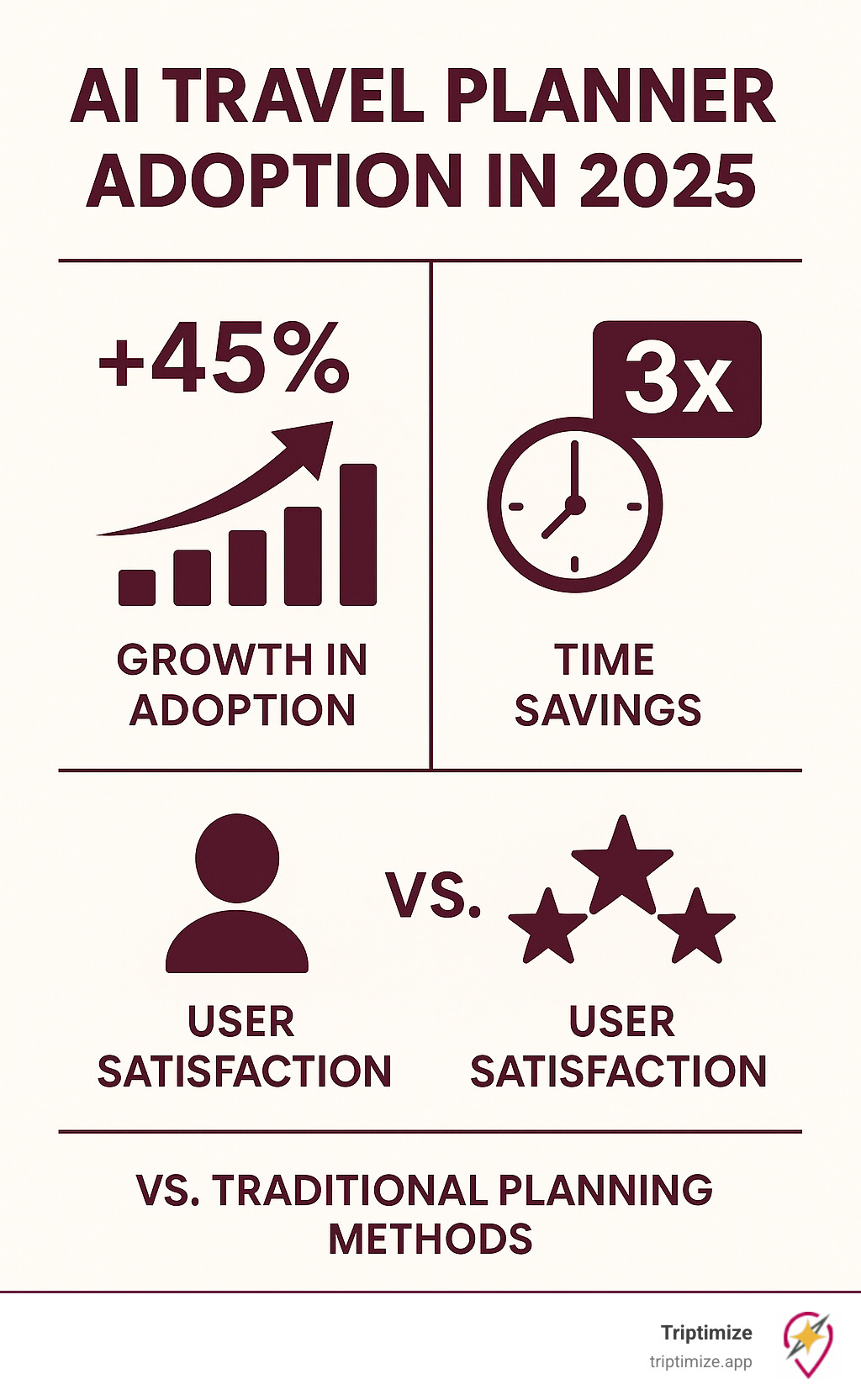
For generations, vacation budgeting has largely relied on manual methods: spreadsheets, painstaking online research, and a healthy dose of hope. People do try to budget – I know that – but it’s undeniably time-consuming and often based on incomplete or inaccurate information. Building a budget that accounts for every possible expense, while also leaving room for spontaneity, feels like a monumental task.
The biggest limitation of traditional budgeting is its static nature. A budget created months in advance is unlikely to reflect real-time price changes or unexpected opportunities. Static budgets don't adapt to flash sales, fluctuating fuel costs, or shifts in demand. This is where AI fundamentally changes the game.
AI brings dynamic pricing analysis to your fingertips, offering personalized recommendations based on your travel preferences, and automating the tedious process of deal-finding. The sophistication of machine learning algorithms is growing exponentially, allowing them to identify patterns and predict price movements with increasing accuracy. It’s no longer about estimating costs; it’s about knowing them, or at least having a very informed prediction.
- Spreadsheets are slow to update and usually out of date by the time you book.
- Manual Research: Prone to errors and incomplete information.
- Static Budgets: Don’t adapt to changing prices.
AI Tools for Flight Forecasting
Flights are often the single biggest expense of a vacation, making accurate price forecasting incredibly valuable. AI algorithms are now capable of analyzing vast datasets – historical flight prices, current demand, competitor pricing, even social media trends – to predict future price fluctuations with remarkable accuracy.
The concept of "optimal booking windows’ is central to this. For years, travelers have debated the best time to buy airline tickets. AI is helping to answer that question definitively. These tools identify periods when prices are likely to be at their lowest, based on complex data analysis. It"s about understanding the interplay between demand, seasonality, and external factors.
Many tools currently offer price tracking and prediction features. Hopper, for example, uses AI to monitor flight prices and send alerts when prices are expected to rise or fall. Google Flights also offers price tracking, and I expect their predictive capabilities to improve significantly by 2026. While I'm hesitant to mention specific SDKs or APIs without a clear source, it's clear that these tools are leveraging machine learning to deliver value.
Predictions aren't guarantees. Geopolitical shifts or fuel spikes can still throw a wrench in the data, but using these models is still more reliable than guessing based on last year's prices.
Finding stays beyond the standard hotel search
AI’s potential extends far beyond just hotel price alerts. It’s about discovering alternative accommodation options that align with your budget and travel style. Vacation rentals (like those found on Airbnb or VRBO), hostels, and unique stays (think boutique guesthouses or glamping sites) can often offer significant savings compared to traditional hotels.
But finding the right alternative accommodation requires more than just a quick search. AI can analyze reviews and ratings from multiple sources to identify hidden gems – properties that consistently receive positive feedback but might be overlooked by traditional ranking algorithms. It can also flag potential red flags, such as negative reviews mentioning cleanliness issues or inaccurate descriptions.
Personalized recommendation engines now look at travel history and preferences to suggest specific properties. While the exact code is proprietary, the result is a list of stays that actually fit your style rather than just the highest-paying advertisers.
Accommodation Options: A Comparative Overview for Budget Travelers (2026)
| Accommodation Type | Typical Price Range (per night) | Privacy Level | Amenities | Location Access |
|---|---|---|---|---|
| Hotels | Generally $100 - $300+ (can be significantly higher in peak season/major cities) | High | Wide range - often includes restaurants, gyms, room service, and daily housekeeping | Often in central locations, but can vary greatly |
| Airbnbs | $50 - $250+ (highly variable depending on size, location, and amenities) | Moderate to High (entire place offers highest privacy) | Kitchen facilities are common; other amenities vary significantly | Can be found in diverse neighborhoods, sometimes further from city centers |
| Hostels | $20 - $60 (dorm beds); $70 - $150+ (private rooms) | Low (dorm beds); Moderate (private rooms) | Basic - shared bathrooms, common areas, sometimes a kitchen | Often centrally located, popular with backpackers |
| Guesthouses/Bed & Breakfasts | $60 - $180 | Moderate | Typically includes breakfast; amenities are generally more limited than hotels | Often located in quieter, residential areas or smaller towns |
| Vacation Rentals (VRBO, etc.) | $75 - $300+ (similar to Airbnb, varies widely) | Moderate to High (depending on rental type) | Typically includes a full kitchen and laundry facilities; amenities vary | Can be found in a wide range of locations, from beachside to mountainside |
| Camping | $20 - $75 (campsite fee per night) | Low (shared facilities) | Basic - typically includes access to restrooms and showers | Often located in natural settings, requiring transportation to attractions |
Illustrative comparison based on the article research brief. Verify current pricing, limits, and product details in the official docs before relying on it.
Smart Itinerary Optimization
This is where AI truly shines. It’s not just about finding cheap flights and hotels; it’s about creating a seamless and efficient travel experience. AI-powered itinerary planners can create optimized routes that minimize travel time and maximize sightseeing opportunities. They can factor in your interests—museums, hiking, food tours—and build a schedule that caters to your specific preferences.
These tools can also consider your budget and travel style. Do you prefer a fast-paced itinerary packed with activities, or a more relaxed pace with plenty of downtime? AI can adjust the itinerary accordingly. Several platforms now offer automated itinerary planning features, and I anticipate these will become even more sophisticated in the coming years.
AI can also help you discover free or low-cost activities. It can identify local events, free walking tours, and hidden gems that you might not find on your own. The goal isn’t to create a rigid schedule, but to provide a framework that allows you to make the most of your time and money. I believe a successful vacation balances planned activities with spontaneous exploration.
Tools like Wanderlog and Rome2Rio are already incorporating AI to suggest optimal routes and transportation options. As AI becomes more integrated into these platforms, we’ll see even more personalized and efficient itinerary planning.
Exposing hidden fees automatically
Hidden fees – baggage charges, resort fees, taxes – can quickly add up and derail your vacation budget. AI can help you identify and avoid these unwelcome surprises. By analyzing pricing data from multiple sources, AI-powered tools can flag potential hidden fees before you book.
The key is transparency. AI can automate the process of reading the fine print, extracting important information about fees and policies, and presenting it to you in a clear and concise manner. This saves you time and effort, and helps you make informed decisions.
Tools that offer comprehensive price comparison features are particularly valuable. These tools should include all fees and taxes in their calculations, giving you a true "all-in" price. I've found that sites like Kayak and Skyscanner are beginning to incorporate more detailed fee information into their results. This feels like a practical area where AI can deliver immediate value.
TravelBugTonic's 12 Tips & AI Synergy
TravelBugTonic’s "12 Tips to Enjoy More While Spending Less" (travelbugtonic.com) provides a wealth of practical advice. These tips range from traveling during the off-season to packing light and taking advantage of free activities. But AI can elevate these tips to the next level.
For example, TravelBugTonic suggests traveling during the off-season. AI can help you identify the best off-season dates based on price and weather patterns, ensuring you get the biggest savings without sacrificing your enjoyment. If the tip is to be flexible with your dates, AI can run simulations to show you how even a slight shift in your travel dates can impact the cost.
By integrating AI-powered tools with these tried-and-true travel tips, you can create a powerful synergy that maximizes your savings and enhances your overall travel experience. It’s about combining human wisdom with the power of artificial intelligence.
- Off-season travel: AI identifies the exact window where weather is good but prices haven't spiked.
- Tip: Be Flexible with Dates – AI simulates cost variations.
- Tip: Pack Light – Though AI doesn't directly help with packing, it can help find cheaper baggage allowances.

No comments yet. Be the first to share your thoughts!