

Hawaii Camping: Is It Really Affordable?
Hawaii. The name conjures up images of luxurious resorts, expensive cocktails, and price tags that make your wallet weep. It’s a common perception, and honestly, for a lot of travelers, it's true. But what if I told you there’s a way to experience the magic of the islands without breaking the bank? Camping in Hawaii is a surprisingly affordable option, allowing you to trade oceanfront hotel views for starlit skies and the sounds of the rainforest.
The idea isn’t about roughing it to an unbearable degree, but rather making smart choices. We're talking about trading convenience for immersion, and hefty resort fees for the freedom of the outdoors. This guide will walk you through everything you need to know to plan a budget-friendly Hawaiian camping trip, covering permits, gear, island-specific costs, and how to realistically stick to a daily budget.
We’ll cover the complexities of securing a campsite, the distinct costs between islands, and what gear you actually need – and what you can skip. I'll share tips on keeping food costs down, navigating transportation, and avoiding those sneaky hidden expenses. The goal? To prove that a Hawaiian adventure under $100 per day is absolutely achievable. It requires planning, flexibility, and a willingness to embrace a more rustic experience, but the rewards are well worth the effort.
Expect this to be a detailed look at making Hawaii accessible. We'll focus on practical advice, and realistic expectations. While $100/day is possible, it’s not a free-for-all. It means prioritizing experiences over luxury, and being prepared to put in a little extra work to save money. But trust me, waking up to a Hawaiian sunrise after a night under the stars is a feeling no five-star hotel can replicate.
Permits & Reservations: Your Biggest Hurdle
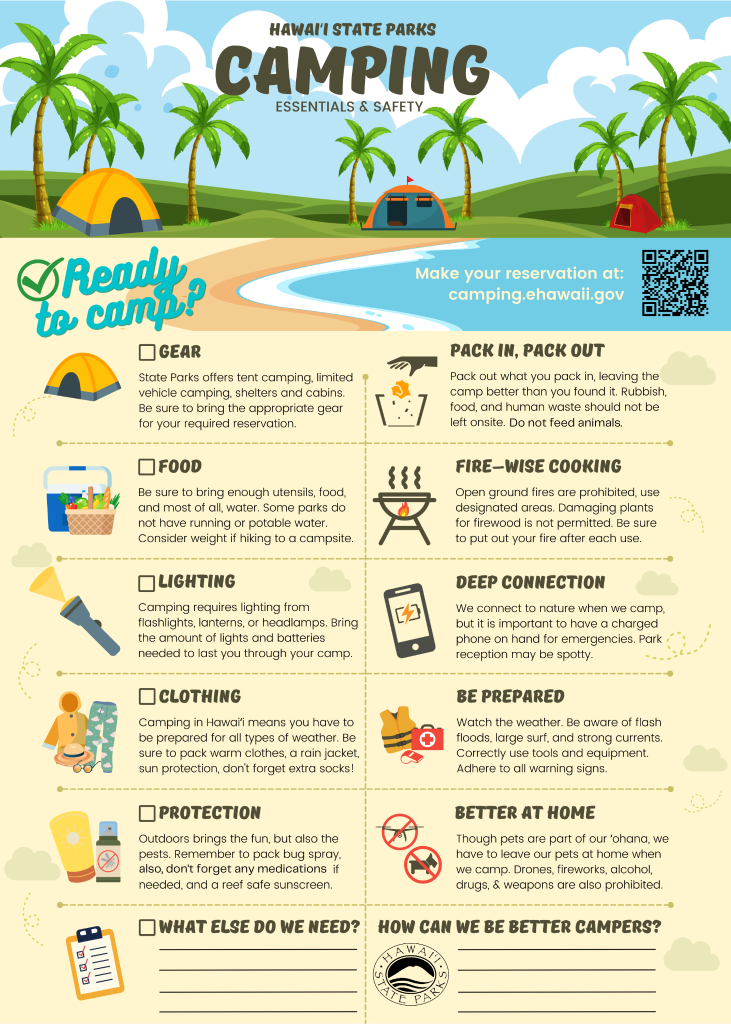
Securing a camping permit in Hawaii is often the biggest challenge. It's not a simple, unified system. You'll need to navigate different rules depending on which island you're visiting and where you want to camp. Generally, permits fall into two categories: those managed by the Division of State Parks (DLNR) and those managed by individual county Parks and Recreation departments.
The DLNR manages camping in state parks, and reservations are essential. They operate on a first-come, first-served basis, and sites can book up months in advance, particularly for popular locations. Reservations are made online through the DLNR website (dlnr.hawaii.gov). Be prepared to create an account and be online exactly when reservations open – these spots disappear quickly. Walk-up permits are sometimes available, but are incredibly competitive and shouldn’t be relied upon.
County parks (like those managed by Honolulu’s Department of Parks and Recreation – honolulu.gov) have their own systems. Some operate on a first-come, first-served basis with on-site registration, while others require reservations. The availability of online reservations varies by county. The Big Island, for example, allows online reservations for certain campgrounds, while others are still walk-up only. It's crucial to check the specific requirements for each park you're interested in.
Permit costs vary by island and campsite type. DLNR permits generally range from $30 to $75 per night for non-residents, depending on the park and the number of people in your party. County park permits are often cheaper, typically between $10 and $30 per night. Inter-island camping requires obtaining permits for each island separately – there’s no single statewide permit. Be aware that some islands have restrictions on the length of stay, typically limiting camping to a maximum of seven days in a row.
Honestly, the permit process can be frustrating. Competition is fierce, and the systems aren’t always user-friendly. Persistence is key. Check the websites frequently for cancellations, and be prepared to be flexible with your dates and locations. Don’t put all your eggs in one basket – have a backup plan in case your first choice isn't available.
Island Breakdown: Costs Vary Wildly
The cost of camping isn’t uniform across the Hawaiian Islands. Oahu is generally the most expensive, due to its popularity and limited camping options. Demand drives up permit costs, and transportation can also be pricier. Expect to pay around $50-$80 per night for a permit, and transportation costs can easily add another $20-$30 per day if you're relying on public transport or ride-sharing.
Maui and Kauai fall somewhere in the middle. Permit costs are typically in the $30-$60 per night range, but transportation can still be a significant expense. While both islands have public bus systems, they don’t cover all camping areas, meaning you might need to rely on ride-sharing or rental cars for at least part of your trip. Grocery costs are also relatively high on these islands.
The Big Island (Hawaii) consistently emerges as the most affordable option. It has the most state park campsites and generally lower permit fees, often around $20-$50 per night. The island is also larger and less densely populated, meaning transportation costs can be lower if you choose campsites near public transportation routes. Plus, you're more likely to find affordable grocery options outside of the main tourist areas.
Free camping, or dispersed camping, is extremely limited and often illegal in Hawaii. While some areas may allow it with specific permits (usually for research or educational purposes), relying on finding a free campsite is not a viable strategy. Always check with the local authorities before attempting to camp outside of designated campgrounds. You should expect to spend around $30-$50 per day on groceries, depending on your eating habits. Fresh produce at local farmers' markets can help keep costs down.
Essential Gear: What You Actually Need
When it comes to gear, resist the urge to buy everything new and expensive. Budget Hawaii camping is about prioritizing essentials and being resourceful. A good quality tent is crucial – something waterproof and able to withstand occasional rain. You can find decent options for around $80-$150. Don't need a four-season mountaineering tent; a three-season tent will suffice.
A sleeping bag rated for at least 50°F is recommended, even in Hawaii. Temperatures can drop at higher elevations. Expect to spend $60-$120 on a suitable sleeping bag. A sleeping pad is equally important for comfort and insulation. A closed-cell foam pad is the most affordable option, costing around $20-$40. For cooking, a simple backpacking stove and pot set are sufficient. A basic stove can be found for around $30-$50.
A headlamp is essential for navigating campsites at night. A reliable headlamp costs around $20-$30. Rain gear is a must, even if the forecast looks clear. A lightweight rain jacket and pants will cost around $40-$60. Insect repellent is also critical, especially during mosquito season. A good repellent will cost around $10-$20. Don't skimp on reef-safe sunscreen – protecting the coral reefs is important. Expect to pay $15-$25 for a reef-safe sunscreen.
Appropriate footwear is also key. Hiking boots are recommended if you plan on doing any hiking, but sturdy sandals or water shoes are sufficient for beach camping. You don't need expensive backpacking gear. Focus on lightweight, durable, and affordable options. Consider buying used gear to save money, or borrowing from friends.
Essential & Affordable Gear for Your Hawaii Camping Adventure

Sets up in 10 minutes · Weatherproof shelter · Available in multiple sizes (2-6 person)
A reliable and easy-to-set-up shelter that won't break the bank, perfect for your Hawaiian camping base.

Rated for 25 degrees Fahrenheit · Lightweight and compact · Includes compression sack
Ensures a warm and comfortable night's sleep in cooler Hawaiian evenings without adding significant bulk to your pack.

15,000 BTU output · Dual fuel (propane or butane) · Includes carrying case
A powerful and versatile cooking solution that is compact enough for travel and essential for preparing meals at your campsite.

400 lumens brightness · Dimmable light settings · Waterproof and durable
Essential for visibility during early morning hikes or late-night campsite tasks, offering reliable hands-free illumination.

SPF 50 mineral sunscreen · UVA/UVB protection · Infused with organic aloe vera
Crucial for protecting your skin from the strong Hawaiian sun, this gentle mineral formula is ideal for sensitive skin.
As an Amazon Associate I earn from qualifying purchases. Prices may vary.
Food & Drink: Eating Cheap in Paradise
Food costs can quickly eat into your budget, so minimizing them is essential. Avoid eating at tourist restaurants – they’re notoriously overpriced. Instead, focus on grocery shopping at local supermarkets like Foodland and Safeway. Buying in bulk can save money, especially for non-perishable items. Plan simple, affordable meals that require minimal cooking. Oatmeal, pasta, rice, and beans are all great options.
Easy meal ideas include pasta with canned tomatoes and tuna, rice and beans with salsa, and oatmeal with fruit. Pack snacks like granola bars, nuts, and dried fruit to avoid impulse purchases. Fresh produce is often available at local farmers' markets, and can be a more affordable option than supermarkets. Drinking water is a key consideration. Tap water is generally safe to drink on most Hawaiian islands, but it’s always a good idea to check with local authorities.
If you're unsure, bring a water filter or purification tablets. Bottled water can be expensive and contributes to plastic waste. A sample meal plan for a day of camping could include: breakfast – oatmeal with fruit ($3), lunch – peanut butter and jelly sandwiches ($4), dinner – pasta with canned tomatoes and tuna ($6), and snacks – granola bars and fruit ($3). That's a total of $16 for a day of food.
Transportation: Getting Around Without a Car
Hawaii is heavily car-dependent, and renting a car significantly increases your costs. However, it’s not always essential, especially on Oahu. TheBus, Honolulu’s public transportation system, is extensive and affordable. A single ride costs $3, and day passes are available for $5.50. It's possible to reach many campsites using TheBus, but it requires careful planning and may involve longer travel times.
Public transportation options are more limited on other islands. Maui has a bus system, but it doesn’t cover all areas. Kauai’s bus system is also limited. Ride-sharing services like Uber and Lyft are available on most islands, but can be expensive, especially during peak hours. Biking is a viable option for exploring areas near campsites, but be prepared for hills and potentially challenging terrain.
If a car is absolutely necessary, rent the smallest, most fuel-efficient model available. Gas prices in Hawaii are significantly higher than on the mainland, averaging around $5 per gallon as of early 2026. Consider carpooling with other campers to share costs. Prioritize campsites that are accessible by public transportation or within walking distance of amenities.
Hidden Costs & Unexpected Expenses
Don't forget to factor in hidden costs that can quickly add up. Parking fees at trailheads and popular attractions can range from $5 to $20 per day. Some campsites don’t have shower facilities, meaning you may need to pay to use showers at nearby parks or gyms. Laundry facilities are also often an additional expense. Be aware of park rules and regulations – violating them can result in fines.
If you’re flying to Hawaii, consider the cost of shipping your gear. Airline baggage fees can be substantial, especially for oversized items. Purchasing insect repellent or sunscreen during your trip can also add to your expenses. It's always a good idea to have a contingency fund for unexpected expenses – things happen, and it’s better to be prepared.
I recommend adding at least $20-$30 to your daily budget to cover these potential costs. This will give you some breathing room and prevent unexpected expenses from derailing your trip. Remember to factor in the cost of any activities you plan to do, such as hiking tours or snorkeling excursions.
Sample Budgets: Can You *Really* Do It?
Let's break down some realistic daily budgets to see if a Hawaiian camping trip under $100 is achievable. These are estimates, and actual costs may vary depending on your choices and the island you visit.
$50/Day (Ultra-Budget): Permits ($20-$30), Food ($15), Transportation ($5 - relying heavily on TheBus or walking), Activities ($0 - free hikes and beaches), Miscellaneous ($5-10). This requires extreme frugality and prioritizing free activities.
$75/Day (Budget-Friendly): Permits ($30-$40), Food ($20), Transportation ($10-15 - occasional ride-sharing), Activities ($5-10 - one affordable activity), Miscellaneous ($10-15). This allows for a bit more flexibility and the occasional paid activity.
$100/Day (Comfortable Budget): Permits ($40-$50), Food ($25), Transportation ($15-20 - more frequent ride-sharing or a day rental), Activities ($10-15 - more options for paid activities), Miscellaneous ($10-15). This provides a comfortable level of flexibility and allows you to enjoy a wider range of experiences.
- Permits: $20 - $50
- Food: $15 - $25
- Transportation: $5 - $20
- Activities: $0 - $15
- Miscellaneous: $5 - $15
Hawaii Camping Budget Breakdown (Per Day, 2026 Estimates)
| Category | Budget: $50/Day | Budget: $75/Day | Budget: $100/Day |
|---|---|---|---|
| Permits & Reservations | $5 - $15 | $10 - $20 | $15 - $30 |
| Food (Groceries & Simple Cooking) | $15 - $20 | $20 - $30 | $30 - $40 |
| Transportation (Bus/Limited Rental) | $10 - $15 | $15 - $25 | $20 - $30 |
| Activities (Hiking, Beach, Snorkeling - Equipment Rental Minimal) | $5 - $10 | $10 - $20 | $20 - $30 |
| Miscellaneous (Sunscreen, Bug Spray, Small Supplies) | $5 - $10 | $10 - $15 | $15 - $20 |
| Campground Fees (State Parks) | $0 - $10 | $10 - $20 | $20 - $30 |
| Potential Shower Fees (Where Available) | $0 - $5 | $0 - $5 | $5 - $10 |
Illustrative comparison based on the article research brief. Verify current pricing, limits, and product details in the official docs before relying on it.
No comments yet. Be the first to share your thoughts!